


| Blue lines of dawn over the two pools |
The two bicycle paths connect Qixingtan and Liyutan. They form the main route for bicycle riders in the Hualien area. The total length of these paths is 35.5 kilometers, with a one-way travel time of about 3.5 hours. Bicyclists can ride along the coastal roads and dikes, enjoying the gentle breeze from the Pacific Ocean. They can also take in the stunning blue sky, which is among the finest in Taiwan. Along the way, visitors can also experience the rich ecology of the Hualien River estuary and the tranquility of the forests and wilderness. Come and experience Hualien’s beautiful landscapes and enjoy the comfort of cycling along this route.
In the distance, the waters of the Pacific Ocean are crystal-clear and blue. The black rocks are smooth and translucent. To the west, one can see lush green mountains and stretching highways. Sunlight Square is adorned with vibrant colors, 3D murals, and a distinct Southern European atmosphere, adding a dreamy touch to the leisurely cycling experience. The section of the bridge from Hualien Port View Bridge to Dawn Bridge has also been repaved with colored asphalt, making cycling on it even more comfortable.
Beyond the hill-like embankments lies the vast Pacific Ocean, along with massive breakwaters that extend far into the sea. Some people sit on these breakwaters, enjoying the rare sense of relaxation that urban life rarely offers. In the distance, white ships dot the blue sea and sky, allowing one’s thoughts to wander with the sea breeze. Visiting this place brings a completely new experience.
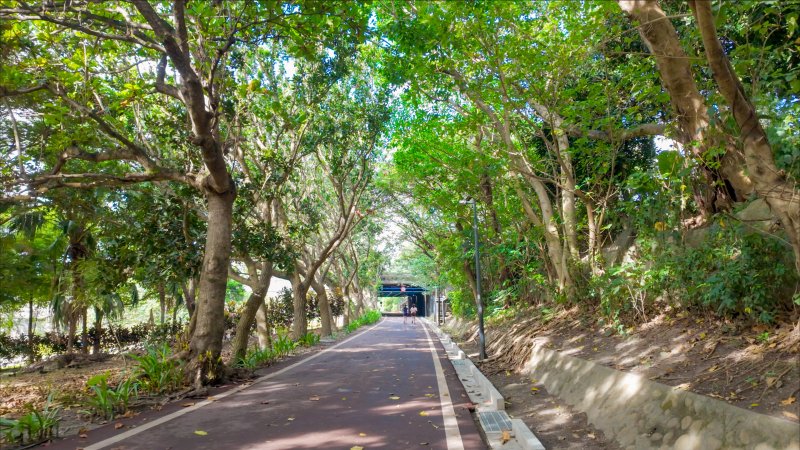
Azure Dyes of Dawn over Two Pools (Photo: Hualien County Government, H2U)
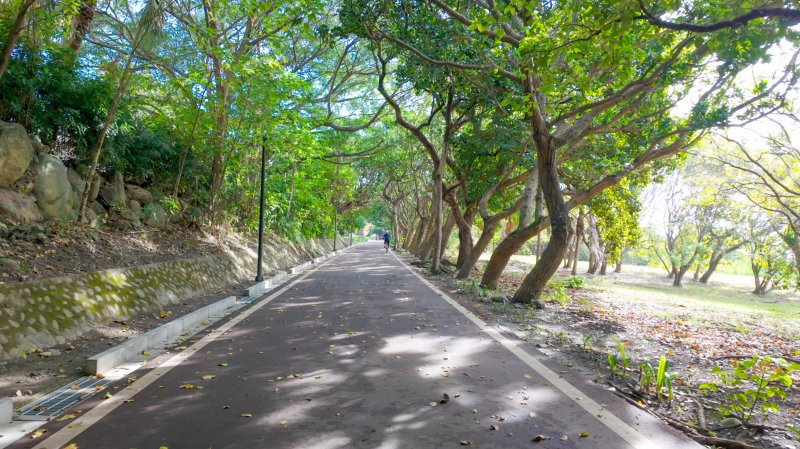
Azure Dyes of Dawn over Two Pools (Photo: Hualien County Government, H2U)
▋Car rental stations nearby
Down-to-earth bicycle rentals
Address: No. 10-1, Haibin Street, Hualien City, Hualien County 970
Phone: 0970 668 985
▋Bike-friendly accommodations
1.Travelers and wanderers: Hualien Dongdaguan (No. 45, Guangfu Street, Hualien City, Hualien County 970)
2. Weiting Hostel (No. 489, Zhongzheng Road, Hualien City, Hualien County 970)
▋Nearby attractions
Seven-Star Pond
Qixingtan is the only county-level scenic area in Hualien County. It’s also known as Crescent Bay. The area features fault lines that have created straits and beautiful arc-shaped bays. There’s a rich variety of natural and cultural attractions here. The sea water is clear and blue, and the black rocks are crystal-clear. From here, one can enjoy views of lush green mountains. Roads extend throughout the scenic area, which stretches from the seaside all the way to the Qixingtan community.
The Qixingtan Scenic Area has bicycle lanes. By using bicycles, visitors can easily reach famous attractions like Nanbin Park, the Stone Carving Museum, and Star-Gazing Square. The 21-kilometer bicycle route offers visitors a unique visual experience. Additionally, there are information boards about marine ecology near the fishing areas. A coastal botanical garden has been established within the windbreak forest areas, allowing visitors to not only enjoy the scenery but also gain knowledge.
The Stone Carving Park by Qixing Lake features exquisite stone sculptures, adding a touch of artistic beauty to the area. Cycling against the wind, with the body leaning forward, allows one to feel the power of the northeast monsoon. Alternatively, it’s possible to watch the massive waves created by the monsoon from a safe distance – a truly spectacular sight. Additionally, Hualien Airport is located nearby. If you’re lucky, you might even see several military planes flying overhead in formation.
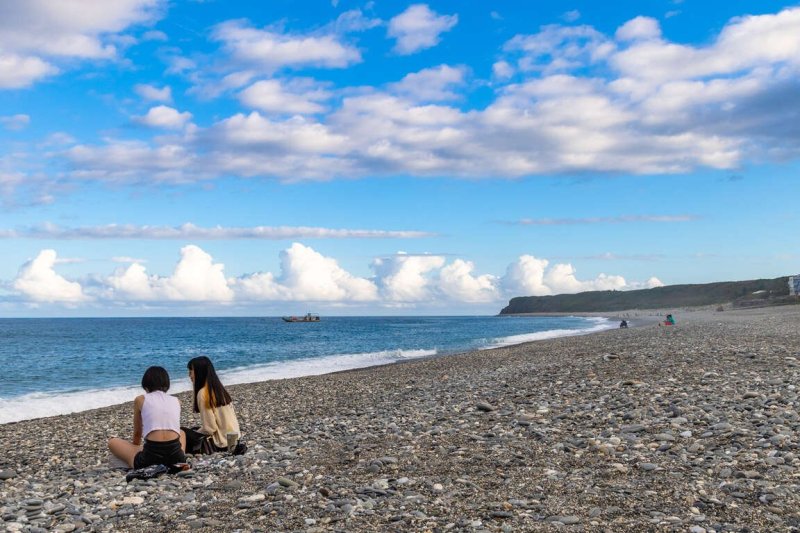
Qixingtan (Photo/Huadong Valley National Scenic Area Management Office)
Meilun Mountain
Meilun Mountain is a landmark of Hualien City. It stands out prominently among the plains of Hualien. With an elevation of 108 meters and an area of over 50 hectares, Meilun Mountain offers stunning views of the vast blue Pacific Ocean to the east, and the Meilun River flows through it to the west. It serves as a “backyard” for the people of Hualien, and is also a great place for people to go for exercise and enjoy the scenery in the morning and evening.
*Detailed information about the Meilun Mountain Trail
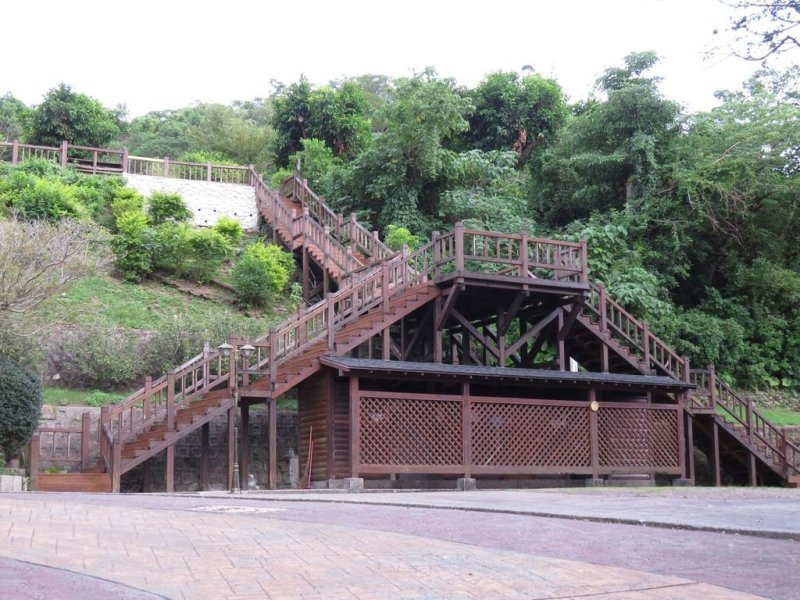
Meilun Mountain (Photo: Hualien Tourism Information Website)
Kita-hama Park
The Pacific Park, covering an area of about 7 hectares, boasts the famous Kitahama Asahi Beach Park. Additionally, there’s the “Koi Leaping over the Dragon Gate” installation, which combines 3D painting techniques. This includes a massive 3D artwork measuring 30 meters in diameter, titled “Universal Dragon”. There are also colorful painted walls depicting marine life, as well as large-scale installation art like hollow-out photo frames. This year, Pacific Park has even more new features: newly opened extreme sports areas, sandplay areas for families, and volleyball courts. These facilities are very popular among local youths.
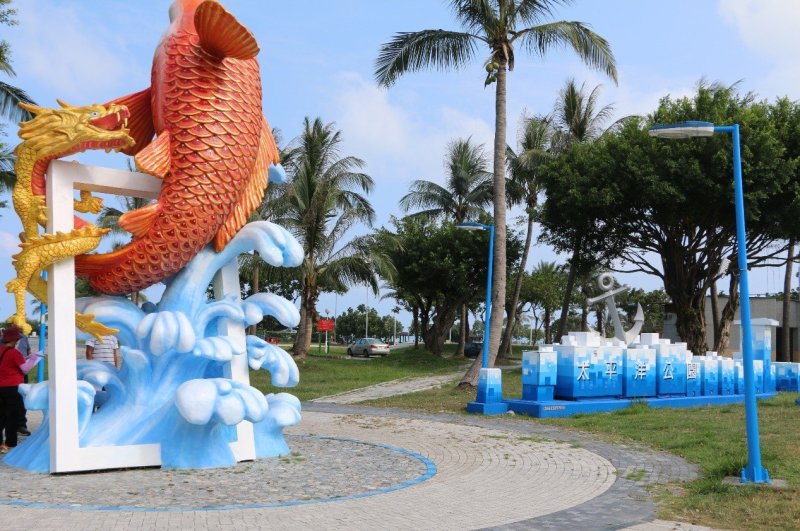
Beibin Park (Photo: Hualien Tourism Information Website)
Nanbin Park
The South Beach section of Pacific Park covers an area of about 20 hectares. At the entrance, there’s a set of stairs. To the left of the stairs stands a statue of a sailboat with the words “Pacific Park” inscribed on it. By walking up the slope behind the stairs, one can reach the White Sand Playground directly. Alternatively, one can simply go up the stairs to get to the playground. However, the slope is gentle, making it easier for families with children to walk up. At the end of the slope, one can see the white sand beach. The white sand contrasts beautifully with the blue sky and the ocean behind it, creating a stunning view.
Compared to other popular parks in Hualien, this playground is truly exceptional. In addition to sand, the playground also features pirate ships, swings, and trampolines. All these facilities, combined with the white sand, make the playground even more enjoyable. Every child who visits here has a great time. Among the attractions is the “Love Slide,” created by the famous cartoonist Xiao Yan. This slide is inspired by scenes from elephant-parent-child games. It allows families who visit here to experience Xiao Yan’s imaginative world as well.
Next to the sandpit is the South Beach bicycle path. The path is smoothly paved, making it perfect for cycling and walking. It’s an ideal place for families to spend time together – playing in the sand, enjoying the sea view, and feeling the sea breeze. It’s a simple way to experience true happiness.
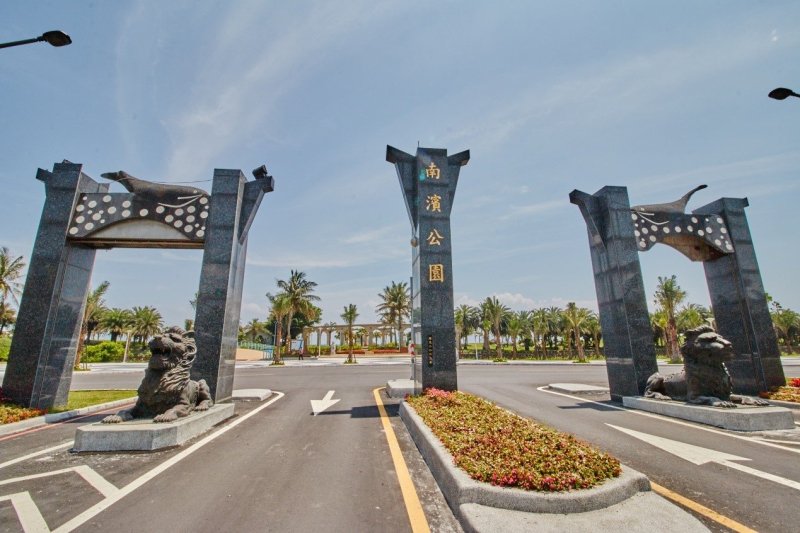
Nanbin Park (Photo: Hualien Tourism Information Website)
Hualien Port Lighthouse
The Hualien Port Lighthouse, built in 1910, is located on Hualien Port’s granite cliffs. It’s a large, square-shaped iron structure. Originally, it was an iron-made lighthouse post, transferred from Anping. The post itself was only 10 meters tall. Due to its low height and weak lighting, it was difficult for ships at sea to see it.
In 1964, the materials from the demolished temporary lighthouse at Fugui Cape were used to build the lighthouse in its current form. The height of the lighthouse was increased to its current 28.4 meters. Since the location of the Hualien Port Lighthouse offers excellent visibility, its lighting equipment is much smaller compared to that of other lighthouses with iron structures.

Hualien Port Lighthouse (Photo/Ministry of Transportation and Tourism, Republic of China)
General’s Mansion 1936
Located within the Japanese-style dormitory complex along the Meilun River is “Shogun’s Mansion 1936”. This complex was built in the 1930s and consists of eight Japanese-style wooden buildings: one single-story building and seven semi-detached dormitories. With its rich historical significance and the desire to preserve this heritage, the site is designed to be a historical park that combines elements of nature, simplicity, and modernity. The design incorporates four key concepts: “the Japanese tea ceremony’s approach to hospitality”, “tea houses that blend with nature”, “Japanese-style gardens that resemble parks”, and “modern infrastructure”.
The park brings in many modern-style food brands that use local Hualien ingredients in their dishes. Examples include “Jia Curry”, “Teisei Gyojo Sandaime”, “FUJO”, and the limited-time bakery “OOA Shogunfu X Chen Yaohun. Bread Port”. In addition, there are many gift shops and experience venues within the park, creating an atmosphere reminiscent of a “living room for Hualien locals”. The park also hosts various themed exhibitions from time to time, allowing visitors to slow down and truly experience the Japanese-style ambiance and historical culture of Hualien.
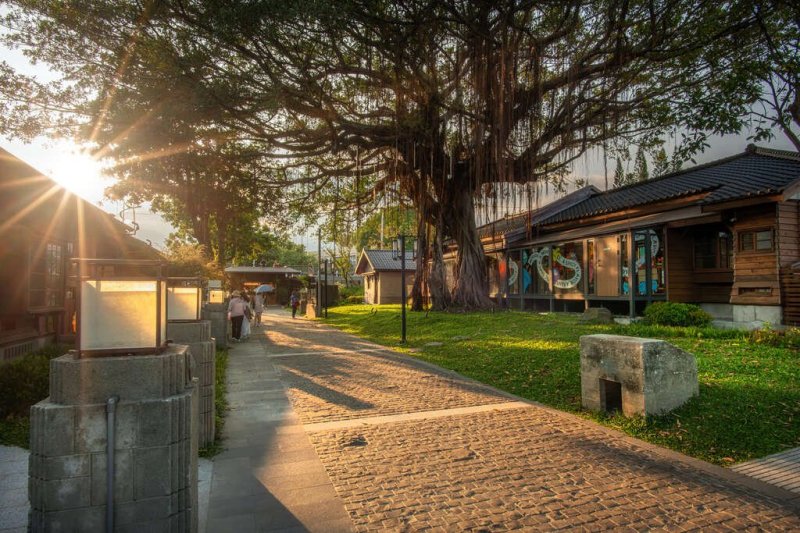
General’s Mansion, 1936 (Photo/HLA Tourism Information Website)
Hualien Cultural and Creative Industry Park
Originally a former liquor factory in Hualien, it was taken over by the Cultural Heritage Administration in 2006 and transformed into a cultural and creative industry park. Covering an area of 3.3 hectares, the park includes 26 historic buildings, preserving the architectural styles of Japanese cypress and concrete structures.
The park regularly hosts large-scale events such as “Music Oasis”, “Mao Hai Bronze Concert”, and “Original Life Festival”. From time to time, various artistic performances, lectures, and craft workshops are also held. There’s also a regular market called “Brew Market, Pure Music”, which takes place every Saturday and Sunday. Local craftsmen set up their stalls, and there are also musical performances by street artists. “Lejianli-Reading Room No. 8” serves as an artistic space where people can find books, snacks, and coffee. The “Dome Flower Creation Club” in the park serves as a hub for technological innovation, cultural experiences, and social entertainment in the Hualien region. It’s also the first “AI Pop Music Center” in the country. This center helps to nurture musical talent in Hualien and offers opportunities for the public to experience AI-based music production.
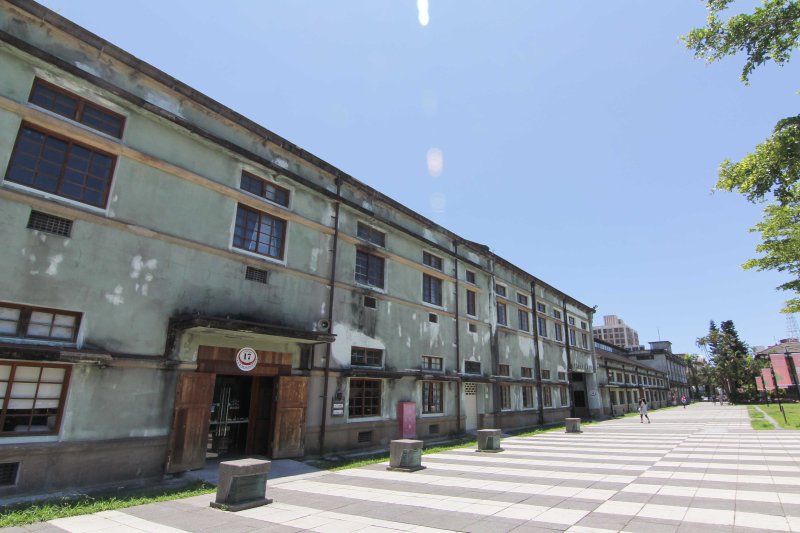
Hualien Cultural and Creative Industry Park (Photo/Ministry of Transportation and Tourism of the Republic of China)
| Carp Pond Loop Line |
Liyu Tan is located at the foot of Liyu Mountain in Chinan Village, Shoufeng Township. It gets its name from being adjacent to Liyu Mountain to the east. Liyu Tan can be divided into the southern and northern parts. Near the northern part of the pond are attractions like Tongmen Mugu and Feicui Valley. The southern part is close to Chinan Forest Amusement Park and Baibao Creek. It’s a popular tourist destination in Hualien. There are various recreational activities available here, such as walking along the paths around the pond, hiking through the forest, and enjoying water sports like SUP. On holidays, it’s a great place for locals to go for picnics or take their children on outings. During the firefly breeding season, the twinkling lights of the fireflies illuminate the dark waters of Liyu Tan, attracting schools, families, and tourists to experience this beautiful ecological sight.
Liyu Lake has a 5-kilometer-long bicycle path that surrounds the lake. This allows cyclists to enjoy the beautiful scenery of the lake and surrounding mountains. On Liyu Mountain, which is 601 meters above sea level, there are several hiking trails. From the observation deck at the top, one can enjoy a panoramic view of the Central Mountain Range, Qilei Mountain, and the Hualien Valley. It’s an excellent place for hiking, birdwatching, and enjoying the natural beauty of the area.
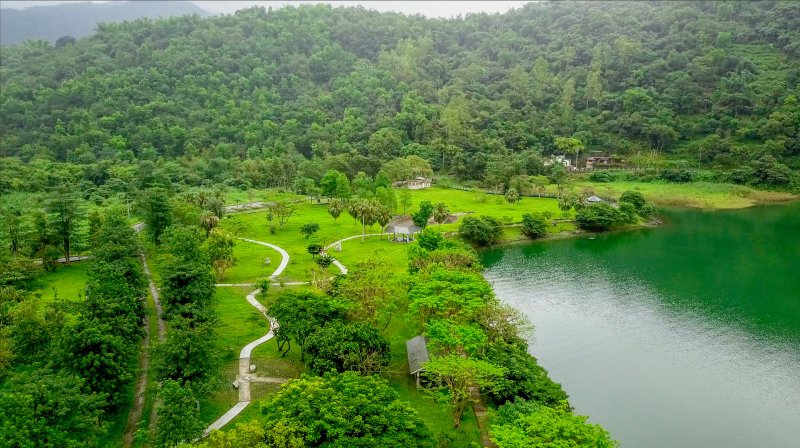
Liyu Pool (Photo: Hualien County Government, H2U)
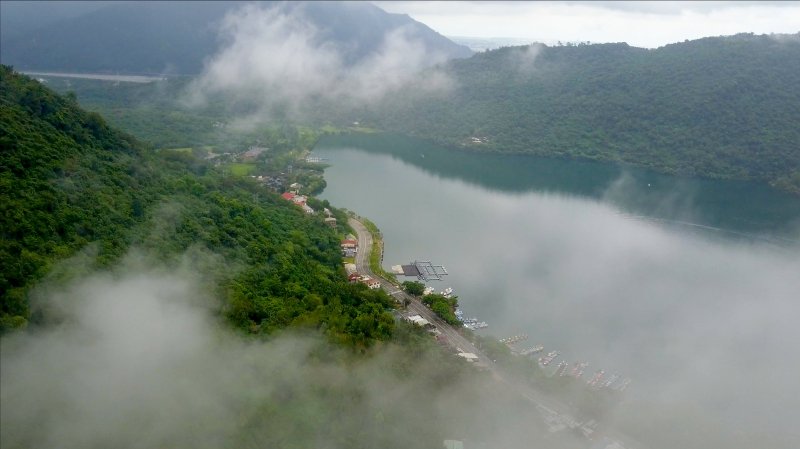
Liyu Pool (Photo: Hualien County Government, H2U)
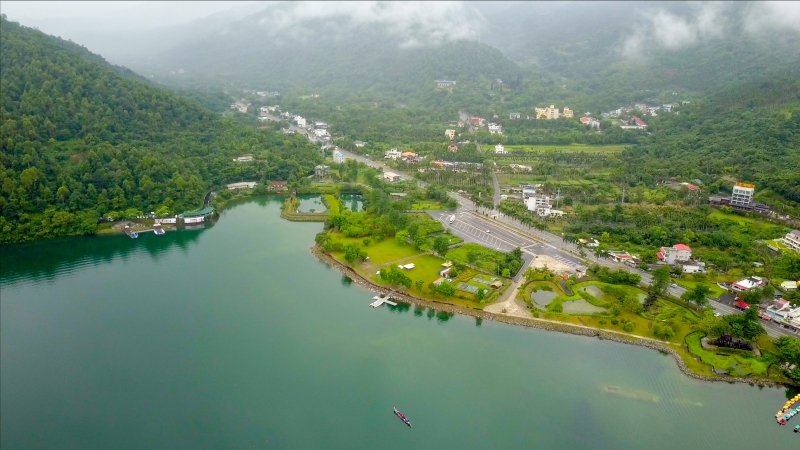
Liyu Pool (Photo: Hualien County Government, H2U)
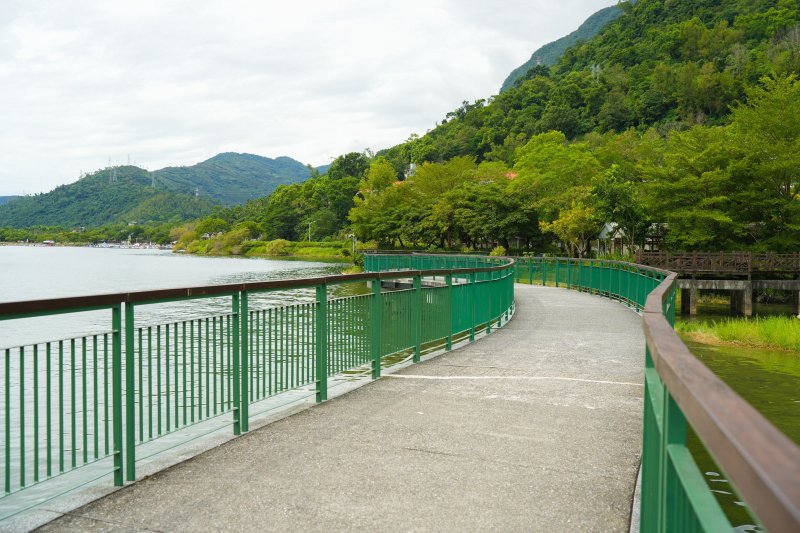
Liyu Pool (Photo: Hualien County Government, H2U)
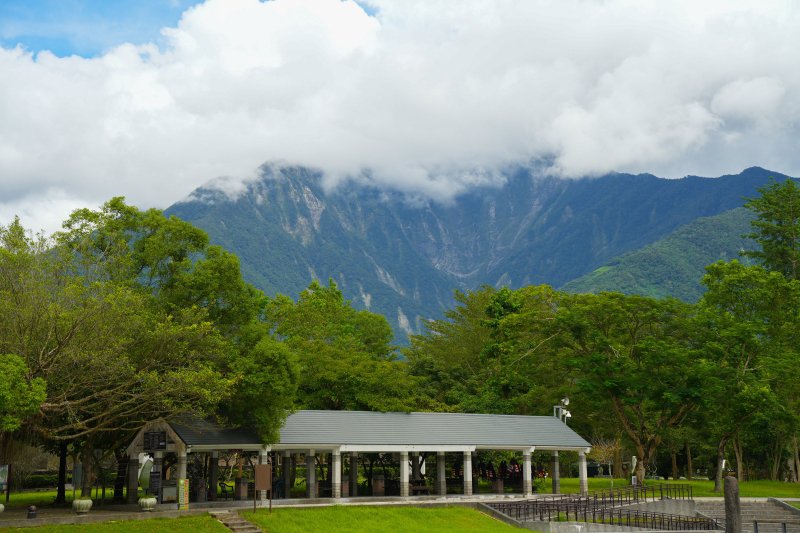
Liyu Pool (Photo: Hualien County Government, H2U)
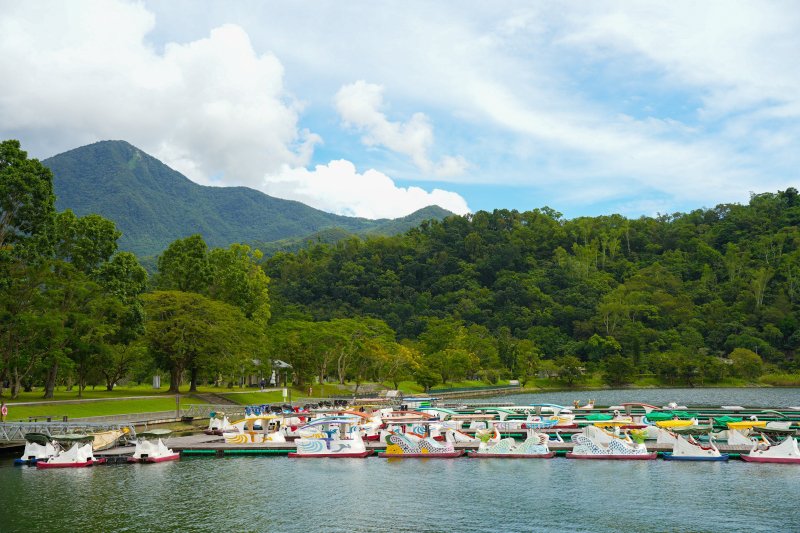
Liyu Pool (Photo: Hualien County Government, H2U)
▋Car rental stations nearby
Youjia Bicycle Rental
Address: No. 100, HuanTan North Road, Shoufeng Township, Hualien County (Liyutan Visitor Center)
Phone: 03 864 1691
▋Bike-friendly accommodations
1.Woxin Homestay (No. 142, Section 1 of Chinan South Road, Chinan Village, Shoufeng Township, Hualien County)
2. Huban 46 Homestay (No. 46, Section 1, Chilun South Road, Chinan Village, Shoufeng Township, Hualien County)
3.Tanxin Pavilion Homestay (No. 3-1, Linyuan Road, Chinan Village, Shoufeng Township, Hualien County)
▋Nearby attractions
Koi Fish Mountain Trail
Carp Mountain gets its name from its resemblance to a carp lying in a coil. The Carp Mountain hiking trail system offers various trails suitable for fitness, bird watching, hiking, enjoying the scenery, and picnicking. Visitors can plan their outings according to their physical condition and available time. Beside the trail lies Carp Pond, with its beautiful waters and lush greenery. “Carp Leaping in the Clear Pond” is one of the eight famous sights of Hualien. Along the trail, there are low-altitude broad-leaved forests and plantations. In spring, cherry blossoms add color to the landscape, while in autumn, the Taiwan oak trees add beauty to the scenery. From April to May, when fireflies are abundant, this place becomes a popular spot for enjoying them in Hualien.
*Detailed information about the Hualien Linyu Mountain Trail System
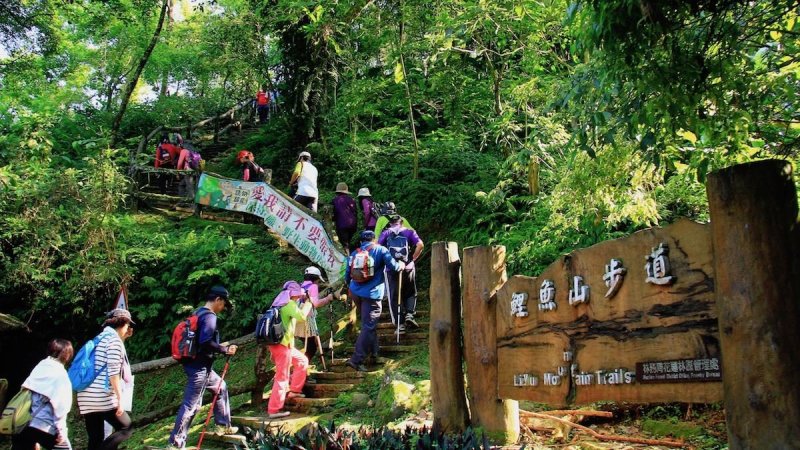
Carp Fish Mountain Trail (Photo/Hualien Forest Management Office)
Chinan National Forest Park
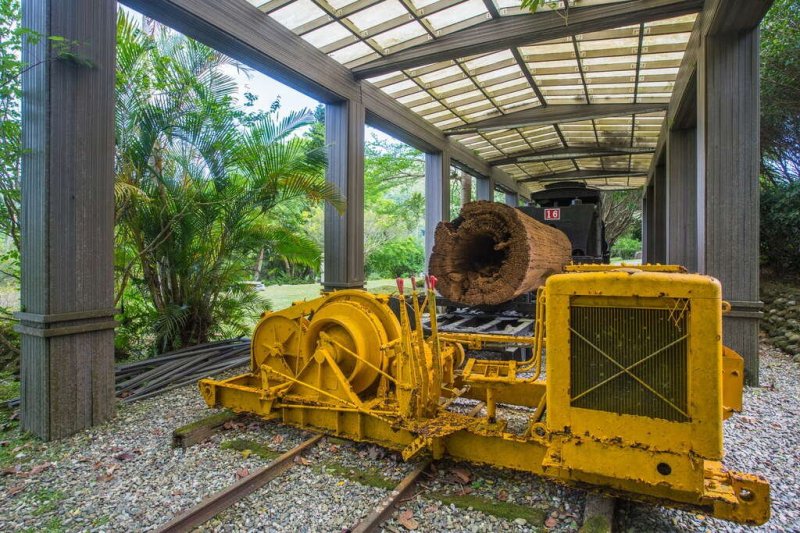
The Chinan National Forest Recreation Area, located near Linyu Tan, was formerly known as the Chinan Workstation. The area boasts several hiking trails, as well as various pieces of equipment from the logging era, including steam-powered locomotives. There’s also a rich natural ecosystem here; butterflies and red-billed blackbirds can be seen everywhere. From April to May, it’s possible to observe fireflies at night. This makes it an ideal place for family outings and educational activities outside of school.
In the past, the Chinan National Forest Recreation Area played an important role. It served as a logging and timber-harvesting area under the management of the Forestry Bureau. All the timber harvested in the Papaya Mountain area had to be transported to Chinan via the Hualun Railway and cableways, from where it was then shipped elsewhere. After logging operations ceased in 1986, although the area no longer serves as a logging site, it still preserves a wealth of forestry-related cultural assets. There’s also a forestry museum on site, where steam-powered and diesel-powered logging equipment, along with other related machinery, are displayed in an outdoor exhibit.
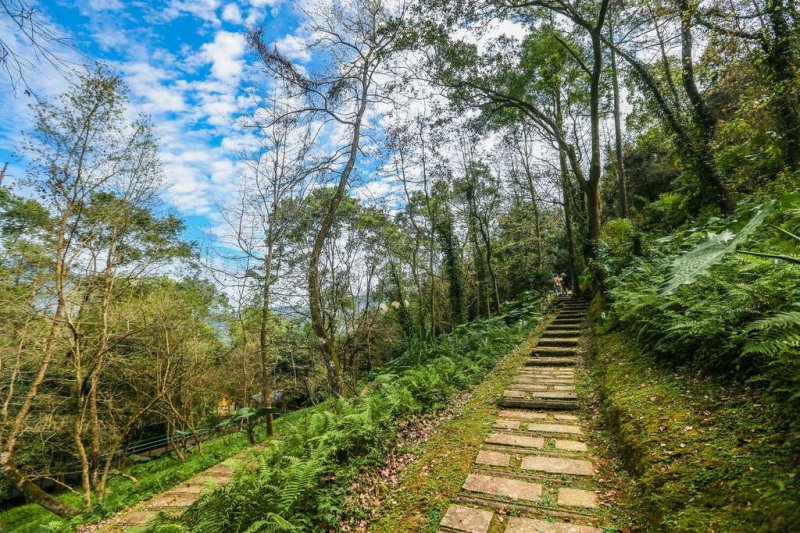
Nan Guo Jia Forest Recreation Area (Photo/Huadong Valley National Scenic Area Management Office)
Nan Guo Jia Forest Recreation Area (Photo/Huadong Valley National Scenic Area Management Office)
| Guangfu Wetland Ecological Corridor |
Hualien Tourist Sugar Factory (Guangfu Sugar Factory)
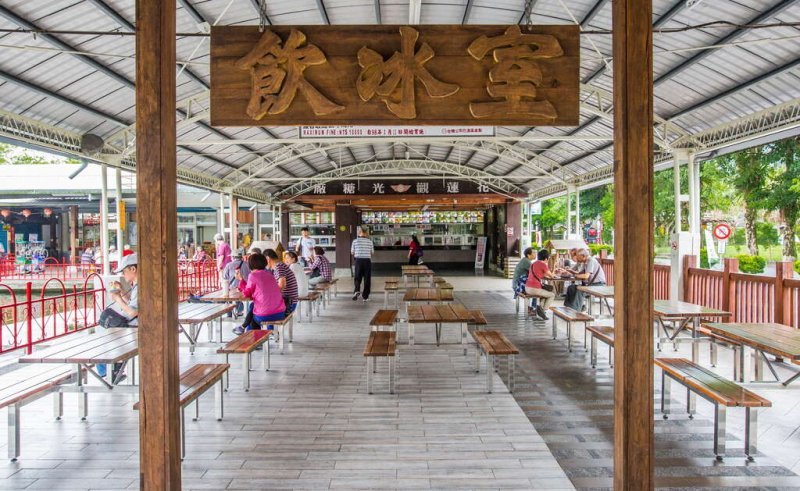
The Hualien Tourist Sugar Factory, established during Japanese rule and also known as the “Guangfu Sugar Factory,” serves as a popular resting spot for cyclists. The factory offers a variety of ice creams and popsicles – sweet and creamy ice creams, as well as refreshing and slightly sweet popsicles. Everyone who tries them is completely satisfied. In addition to enjoying ice cream, visitors can also take part in DIY workshops, ride on electric bikes around the park, and stay in Japanese-style dormitories provided by the factory. It’s definitely a must-visit attraction in Hualien.
Ice Drinking Room (Photo/Huadong Valley National Scenic Area Management Office)
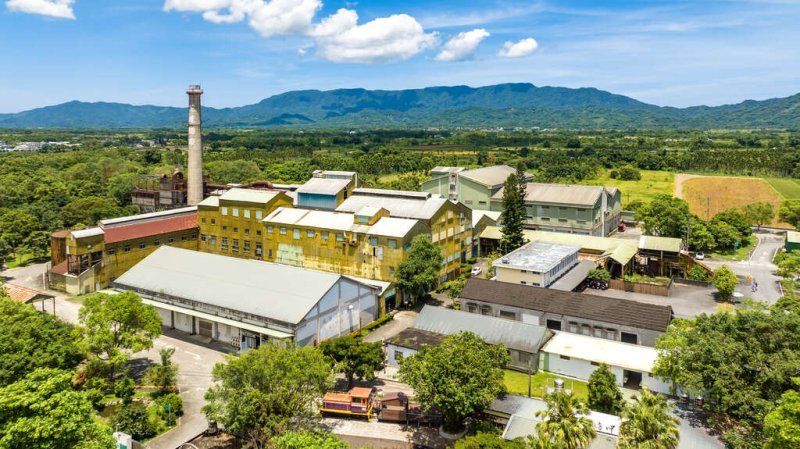
In 1913, the “Tohoku Sugar Manufacturing Co., Ltd.” established the “Hualien Port Sugar Factory” in Shoufeng Township, Hualien County. In 1921, the Taiwa Factory was built in Guangfu to increase sugar production and meet the military’s needs at that time. However, during World War II, both sugar factories were destroyed by American bombings. Later, Taiwan Sugar Corporation took over the facilities and gradually restored and transformed them into what they are today: tourist attractions related to sugar production.
Guangfu Sugar Factory (Photo/Huadong Valley National Scenic Area Administration)
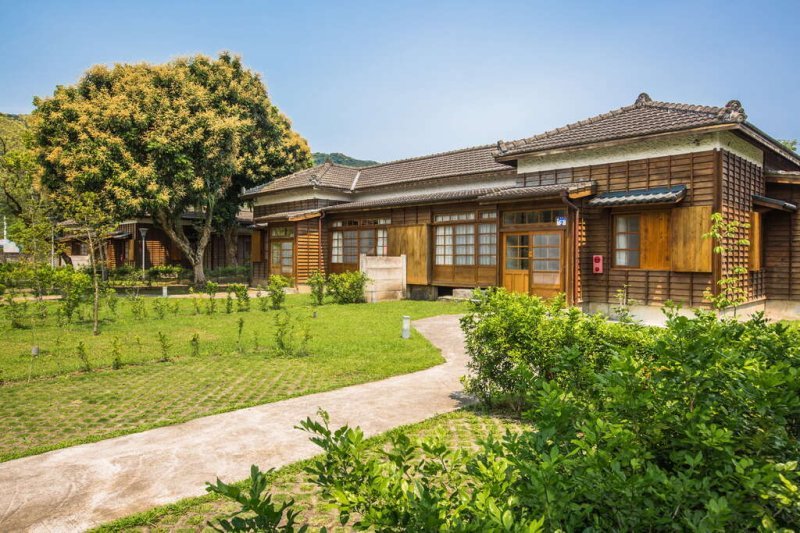
Next to the sugar factory, there are rows of neatly arranged Japanese-style dormitories. These are among the few remaining examples of Japanese-style wooden buildings in Taiwan. These cypress wood buildings were originally used as staff dormitories during the Japanese colonial period. They’ve been well-preserved over the decades, exuding a sense of nostalgia. Visitors who stay here can experience the elegance and charm of Japanese-style wooden houses.
Japanese-style dormitories (Photo/Huadong Vertical Valley National Scenic Area Management Office)
On December 23, 2022, the “Forest Hot Spring and Rebuilt Sugar Factory Station,” a collaborative project between the Tourism Bureau of the Ministry of Transport (now the Tourism Administration) and Taiwan Sugar Corporation, was officially launched. This project makes full use of the abandoned sugar factory buildings and related railway infrastructure. The “Hitachi No. 17 Diesel Locomotive,” which was previously stored on the factory grounds, was restored and transformed into a bicycle rest area. With cyclists in mind, additional facilities were added, including bicycle lanes, rest areas, parking spaces, maps, and information about nearby attractions. This creates a better and more user-friendly environment for cyclists. For those traveling to Hualien or who are avid cyclists, this is yet another great place to rest and relax.
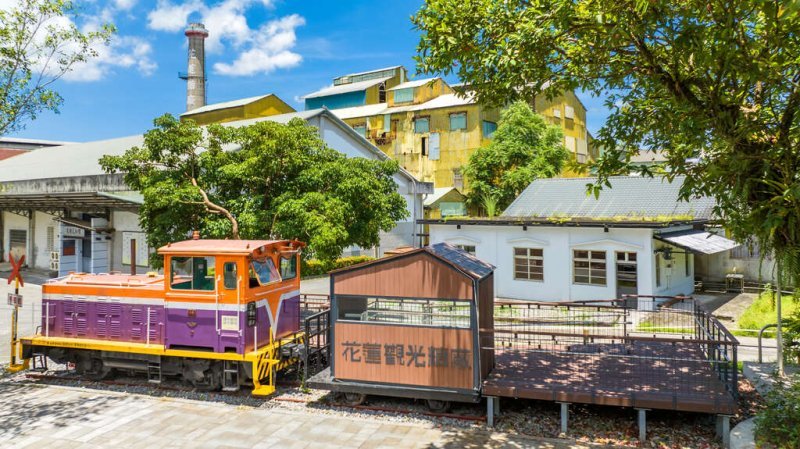
Hualien Tourist Sugar Factory (Photo/Management Office of Hualien East Coast National Scenic Area)
Matthew’s Saddle Wetland
The Mat’ai’an Wetland in Hualien’s Guangfu Township is a natural swamp area with a constant flow of springs. It serves as a habitat for a diverse range of wildlife, including birds, frogs, and bottom-dwelling fish. Visitors can also experience the unique Balaguo fishing method. This allows them to not only learn about ecological principles but also enjoy freshly caught fish and shrimp, as well as salt-roasted Wu Guo fish. Additionally, visitors can try the local stone-hotpot, experiencing a truly authentic indigenous culinary experience.
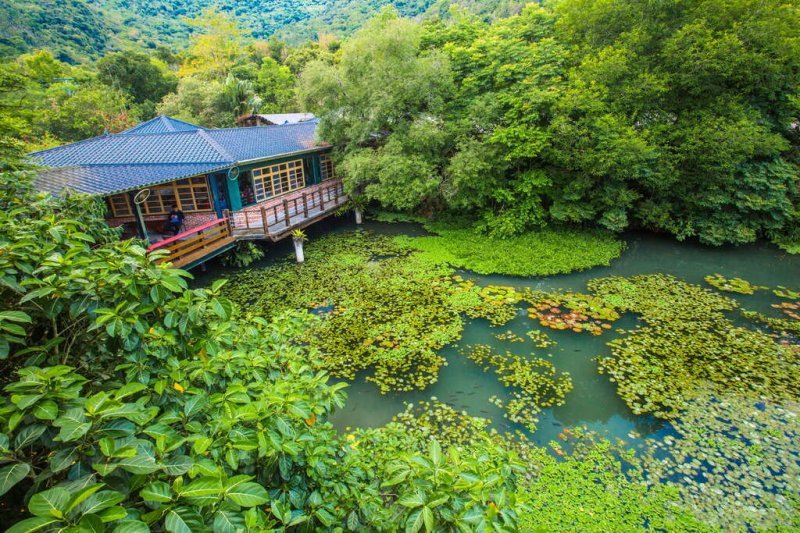
Matthew’s Saddle Wetland (Photo/Huadong Valley National Scenic Area Management Office)
Matayasan is a traditional habitat of the Ami people. In the past, this area was covered with tree beans, which is why it was called Matayasan (vataan, meaning “tree beans” in the Ami language). The Ami people who lived here developed a fishing method called “Palakaw”. They used hollow bamboo and branches to create three-layered structures that were placed in ponds. This created habitats that fish and shrimp liked to inhabit, while allowing smaller fish to move in and out freely. After some time, the bamboo structures were pulled out of the water, and the small shrimp clinging to the branches could be caught using triangular nets. The large bamboo tubes placed at the bottom of the ponds were used to catch bottom-dwelling fish like eels and catfish. They adhered to the principle of not overfishing, demonstrating the wisdom of the Ami people in managing their natural resources.
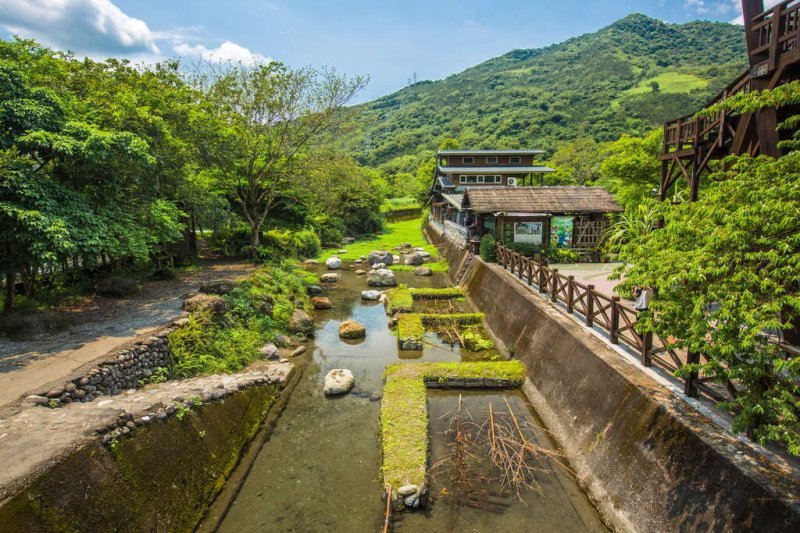
Matthew’s Saddle Wetland (Photo/Huadong Valley National Scenic Area Management Office)
From May to August, the Matheson Wetland is covered in lotus and water lilies. Walking along the T-shaped wooden walkways, one can enjoy the romantic atmosphere of this summer garden. From the observation deck, one can get a panoramic view of the Matheson Wetland. After that, visitors can ride bicycles or take walks along the “Matheson Wetland Bicycle Trail”, experiencing a truly natural and delightful adventure.
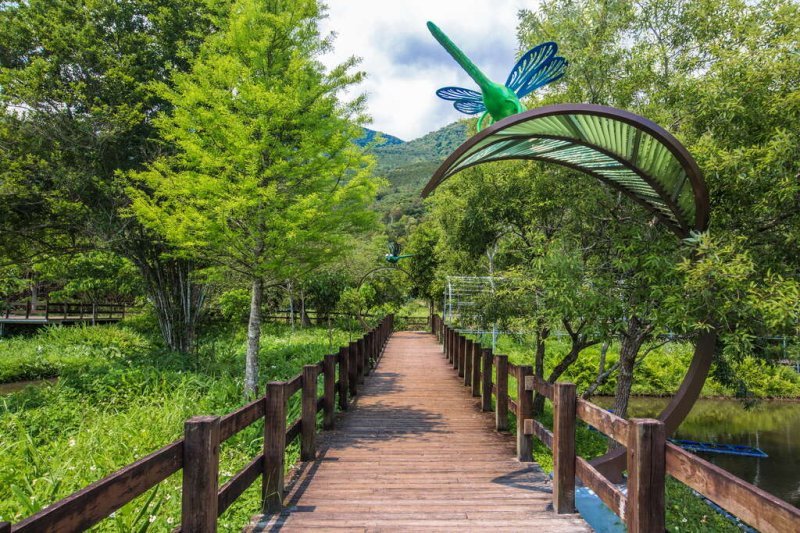
Matthew’s Saddle Wetland (Photo/Huadong Valley National Scenic Area Management Office)
▋Car rental stations nearby
In front of Guangfu Railway Station, Youbike
▋Bike-friendly accommodations
1.Taiwan Sugar Hualien Hotel (No. 19, Tangchang Street, Dajin Village, Guangfu Township, Hualien County)
2.Xin Lü Stone House Homestay (No. 60, Daquan Street, Daquan Village, Guangfu Township, Hualien County)
3.Shangdahe Homestay (No. 78, Zhongxue Street, Daping Village, Guangfu Township, Hualien County)
▋Nearby attractions
Lasoer Ecological Park
Behind the Hualien Guangfu Sugar Factory, there’s a little-known hidden gem: the Lasso Spring Ecological Park. The park contains six springs, each with its own pristine natural environment. The crystal-clear water seems to have been colored by God himself. This beautiful spot is also home to the Taiwan native aquatic plant, the small-stemmed stonecrop, which is on the verge of extinction. Behind this stunning landscape lies a touching Ami tribe legend.
It is said that the divine bird Doura always protected the inhabitants of the valley. However, it was wounded by hunters. Fortunately, the villagers of Lassoé took care of it, and it recovered. But good times didn’t last long. Droughts and plagues struck the village of Lassoé repeatedly. Then, the divine bird Doura shed six tears, which turned into springs. By sacrificing itself, Doura saved the villagers, enabling them to live a prosperous and happy life for generations to come.
The Lhasuo Spring, where primitive ecology and Ami tribe myths intersect, was named the most beautiful hidden gem in 2016. Spring No. 1 reflects different shades of blue depending on the sunlight, earning it the nickname “Blue Tears”. It’s like a Taiwanese version of Jiuzhaigou.
And at Spring No. 6, whose water is crystal clear, one can sit in a kayak, remove the algae from the surface of the water, and get up close to admire the tiny stone plants. It’s like taking a magical journey through this beautiful landscape.
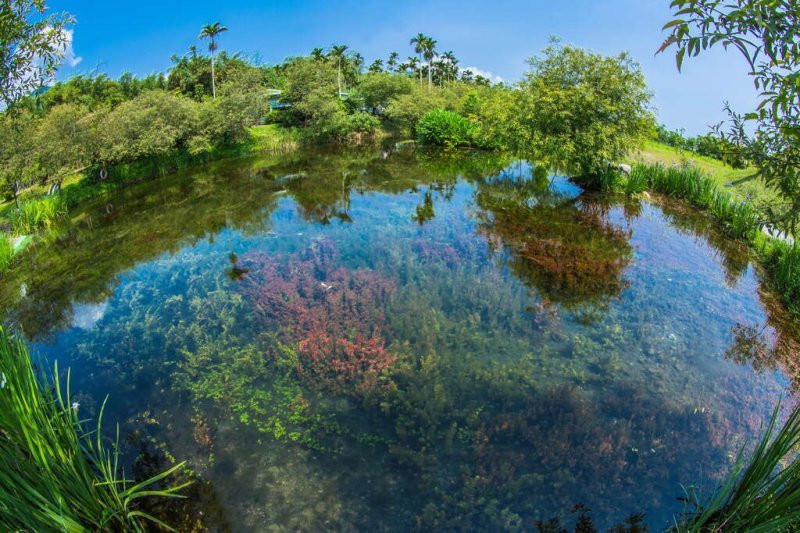
Laso’e Ecological Park (Photo/Huadong Valley National Scenic Area Management Office)
| Mizuho Rural Healing Line |
Ruishui Township is part of Hualien County. To the east, it’s bordered by the Coast Range and the Pacific Ocean. To the west lies the Central Mountain Range. To the south lies the Wuhu Plateau, where Tianhe tea is grown. It’s considered one of the most beautiful towns along the Tropic of Cancer. Ruishui Township was formerly known as “Shuiwei,” meaning “the end of the Xiugulian River”. It covers an area of 135 square kilometers, with a population of about 14,800 people. Ruishui Township is famous for its boating activities on the Xiugulian River, as well as its red-brown leaf hot springs and Ruishui hot springs. The area is also known for its Tianhe tea and scenic tea plantations. Many tourists enjoy boating while soaking in the hot springs. They also take the opportunity to visit the tea plantations, taste fine tea, and buy high-quality tea. The hot springs have a temperature of around 50 degrees Celsius. The water is clear and belongs to the hydrogen carbonate type. It’s colorless and odorless. Surrounded by forests, the area has a romantic atmosphere, especially at dawn and dusk.From here, one can enjoy the picturesque rural scenery of Mabuchi Plateau. After taking a bath, one can savor rich Mabuchi tea. When hungry, one can try the local delicacies nearby. It’s truly a blissful experience, like being in a fairyland on earth. As for agricultural products, there are the Takao Mandarin Orange Orchards, Fuxing Pineapple Plantations, Ruixiang Dairy Farm, Mabuchi Tea Plantations, as well as vegetable cultivation areas in Ruimei and Ruiliang Villages. With the support and guidance of relevant organizations, these places offer even more opportunities for enjoying the rural lifestyle. They’re perfect for tourism throughout all four seasons.
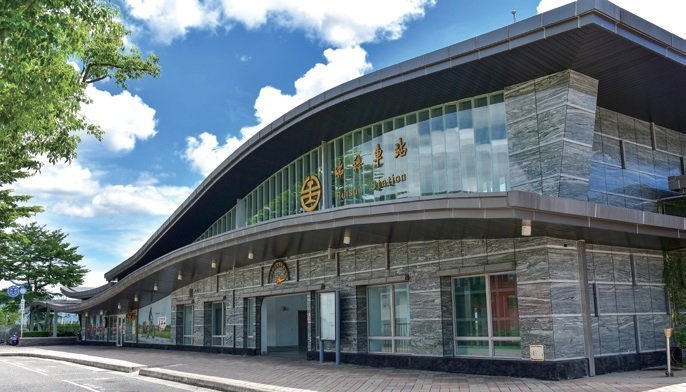
Suimei Station (Photo: Hualien Tourism Information Network)
Ruixiang Hot Spring Park (also known as Mizuho Hot Spring Park)
Located in Ruishui Township, Hualien County, this is the first public park in the area to offer free hot spring foot baths. Combining the style of Japanese gardens with modern lighting design, it’s a popular spot for visitors to relax and unwind during their travels along the Hualien Valley.
Park Features and Facilities
- Golden Spring Foot Bath: This offers Taiwan’s only carbonate spring. Rich in iron and minerals, the water turns yellowish-brown when exposed to air. Crystals often form on the surface of the water, giving it the nickname “Golden Spring”.
- Recreational Facilities: Covering an area of over 300 square meters, these facilities include an outdoor foot bath area, covered walkways, a stage, and public restrooms. The design is user-friendly, making it convenient for visitors of all kinds to use.
- Nighttime Lighting: The park is equipped with beautiful lighting fixtures and interactive sensors (such as large flower-shaped lights). At night, the lighting creates a stunning atmosphere.
- Bicycle routes: The park is connected to the Mizuho Ring Road for Bicycles (the blue-colored “Onsen Line”). It makes for an ideal stopover point for cyclists.
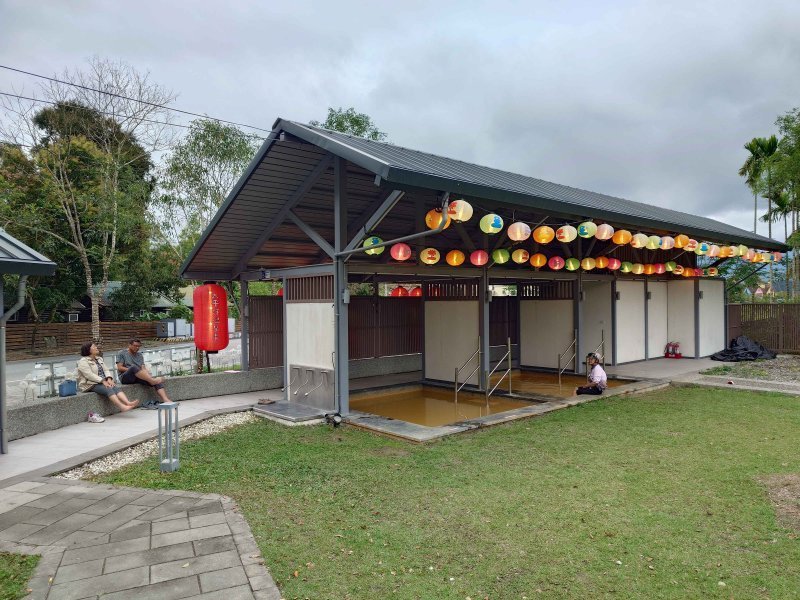
Ruixiang Hot Spring Park (Photo by Wu Shangqi)
▋Car rental stations nearby
Xiaoyan Locomotive Rental
Address: No. 86, Section 1, Zhongzheng North Road, Ruishui Township, Hualien County
Phone: 03 887 5587
▋Bike-friendly accommodations
1.Mizuho Tianhe International Tourist Hotel (No. 368, Section 2, Wenquan Road, Mizuho Township, Hualien County 978)
2.Tiger Lord Hot Spring Resort (978, No. 101-5, Xiangbei North Road 2nd Section, Ruishui Township, Hualien County)
3. Coconut Grove Hot Spring Hotel (No. 199, Section 3, Wenquan Road, Ruishui Township, Hualien County 978)
▋Nearby attractions
Mizuho Ranch
Mizuho Ranch, famous for its fresh milk sold throughout Taiwan, has a dining area and an outdoor café. Here, you can not only enjoy freshly squeezed and brewed milk from the farm, but also see herds of cows and ostriches grazing on the grass. Children can feed the animals with hay together with their parents. The spacious grounds are perfect for children to run and play around. It’s a great place for family outings.
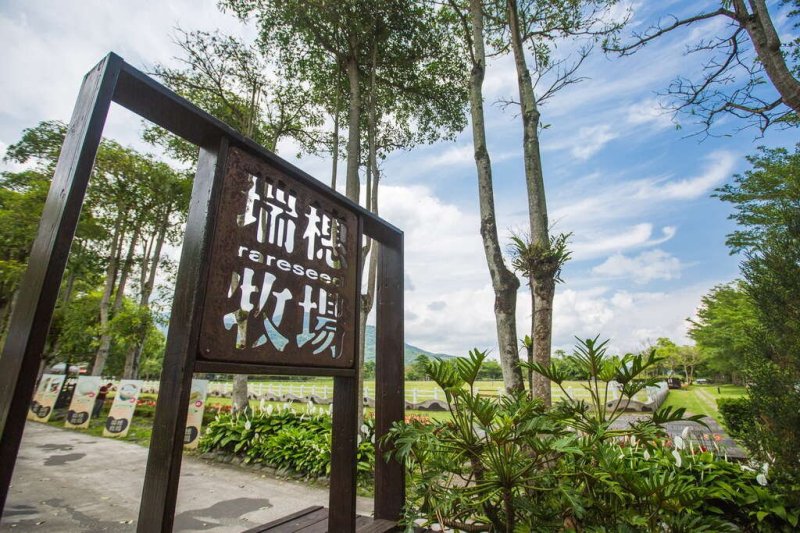
Mizuho Ranch (Photo/Huadong Valley National Scenic Area Administration)
Zeppelin Tree
A single tree can become a tourist attraction because of a famous person associated with it. Similarly, a tree can become a symbol of protection, thanks to the spirit of caring for one’s homeland. Chen, the leader of the Hualien Zhiluo tribe, said that during the filming of “Seeing Taiwan,” director Tsai Ming-liang spent many days in the spring rain. Every day, he stood under a mango tree, praying for sunny weather. Finally, his prayers were answered, and he managed to capture on film the famous “big footprints” in the rice fields.
To commemorate Director Zibeline’s perseverance in protecting his homeland, it is planned to name this mango tree “Zibeline Tree”. Kurt, a close friend of Director Zibeline, once said that Zibeline was like a big tree. We weren’t merely sheltered under its shade; we were actually rooted within its structure, beneath its leaves. While looking up to him, we continued to do what he did. In this way, we too became, in a small way, like that big tree.
Spring Day Green Tunnel
Due to the sparse population in these areas, there aren’t many large vehicles on these 193 county roads. Along the section from Chunri-ri to Leheli-ri in Yuli Town, various tree species such as small-leafed olive trees, phoenix trees, and abelmosk trees are planted. This stretch of land stretches for hundreds of kilometers. Each season brings its own unique beauty. Especially during the flowering period, the sea of flowers stretching for kilometers prompts drivers to slow down or even stop by the roadside to take some photos before continuing on their way.
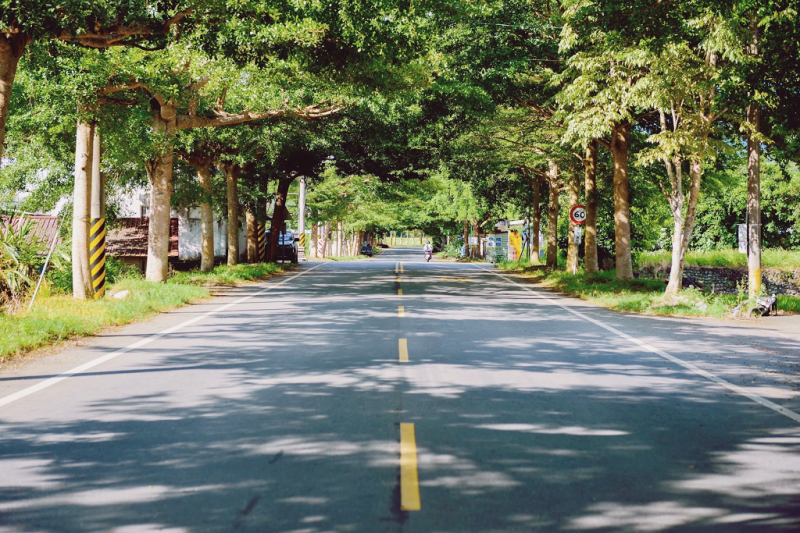
Spring Day Green Tunnel (Photo: Hualien County Hakka Industry Museum)
Xiugulian Creek Visitor Center
When it comes to water activities in the Hualien region, nothing beats “boating on the Xiugulian River”. Back in the 1980s, the Xiugulian River had already become the go-to destination for boating enthusiasts across the country. During the summer season, when boating is at its peak, along the 24-kilometer stretch of river between Ruishui Bridge and Changhong Bridge, red rubber boats add a beautiful touch to the scenery. There are over 20 challenging rapids and dangerous sections along the way, providing boaters with thrilling and unforgettable experiences. The natural beauty of the valleys and rock formations along the river also leaves a lasting impression on visitors. Along the Ruigang Highway, which runs along the riverbank, countless vans shuttle back and forth between the two areas, transporting passengers.
The East Coast National Scenic Area Management Office has established the Mizuho Boating Service Center along the banks of the Xiugulian River, south of the Mizuho Bridge. This service center, designed in the style of traditional indigenous buildings, provides information about the ecological resources of the Xiugulian River, offers information related to boating activities, and shows videos regarding boating safety. There’s also a camping area on site. During the boating season, this center offers visitors all the necessary services.
※The Xiugulianxi Visitor Center is currently under reconstruction. The iconic totem pole, which was once a prominent landmark, has become too damaged due to years of earthquakes to be repaired. It has therefore been demolished.
Tropic of Cancer Marker Park
The Tropic of Cancer Marker Park is located on the Miharu-Maeku Plateau. The white sundial-shaped structure is a must-photograph spot for visitors passing through the plateau. The park includes an outdoor parking lot, an art installation in the shape of a giant teapot, restrooms, walking paths, and areas for resting. The path from the parking lot to the park is designed to be barrier-free, allowing visitors of all ages to easily walk there. Visitors can take photos with the Tropic of Cancer Marker and the teapot-shaped art installation. They can also read the information boards in all four directions to learn about the 24 constellations and celestial phenomena. From there, they can enjoy the beautiful views of the tea plantations and mountains surrounding the Miharu-Maeku Plateau.
The Tropic of Cancer marks the farthest point in the Northern Hemisphere where the sun can shine directly on the Earth’s surface. It is located at 23.5 degrees north latitude. On the day of the summer solstice, the sun shines directly on the Tropic of Cancer. At noon, objects placed vertically will cast no shadow, creating a unique astronomical phenomenon along this line. Additionally, most of the countries and regions crossed by the Tropic of Cancer are deserts. Taiwan is a rare oasis along this line. Its island climate and monsoons contribute to this distinctive geographical feature.
In Taiwan, there are three markers marking the Tropic of Cancer. These are located in Shuishang Township in Chiayi County, Ruishui Township in Hualien County, and Fengbin Township. The marker in Ruishui was established in 1933, initially placed to the west of Ruishui Railway Station. It was later moved to its current location due to the expansion of the eastern railway line. However, the actual point where the Tropic of Cancer passes through Provincial Highway No. 9 is about two kilometers south of the current marker.
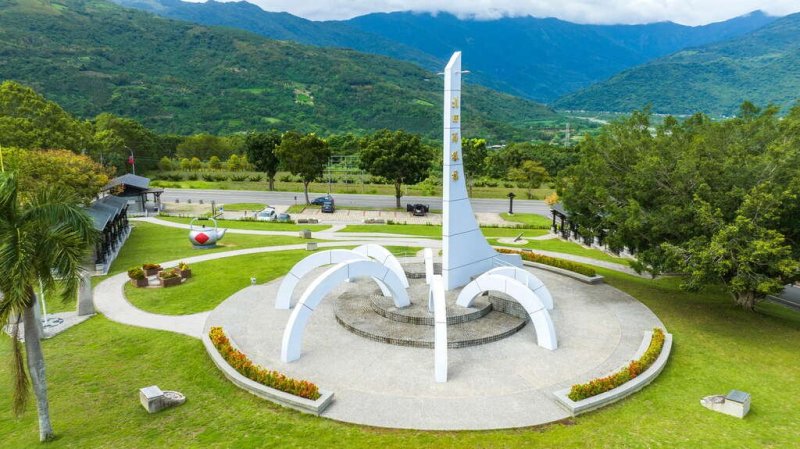
Tropic of Cancer Marker Park (Photo/Huadong Valley National Scenic Area Management Office)
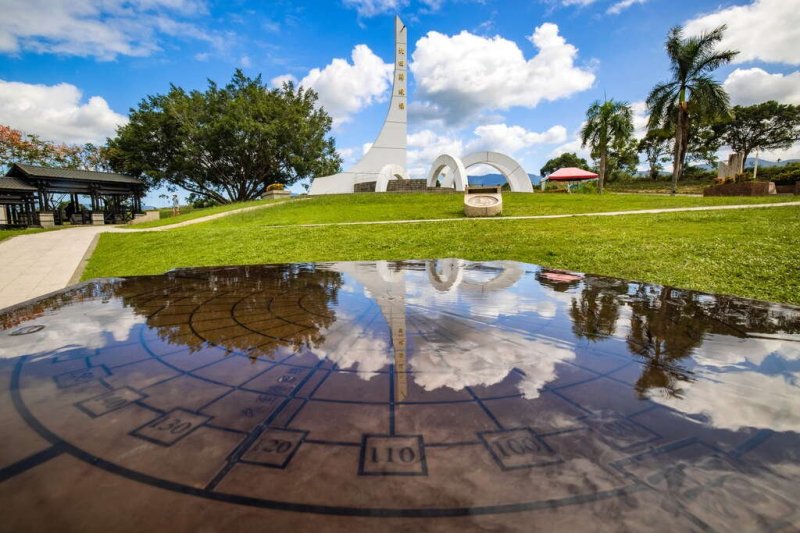
Tropic of Cancer Marker Park (Photo/Huadong Valley National Scenic Area Management Office)
The Sea of Golden Rods on Akagaya Mountain
Equally famous as Rokushise Mountain, Akako Mountain is known for its “Akako Three Scenic Spots” and the sea of goldenrod flowers. From August to September, when the goldenrod flowers bloom, the entire hillside is covered in a sea of yellow flowers. This magnificent sight leaves visitors in awe. At the same time, visitors can also see farmers working in the goldenrod fields, harvesting the buds just before they bloom. This is a beautiful example of how nature and human activity can coexist harmoniously.
During the Japanese colonial period, Akako Mountain was famous for its abundance of Akako trees. These trees were used by the Japanese to make gun stocks. Over time, Han people who migrated from the west settled here and began growing crops like corn and peanuts. Later, they switched to growing golden needle flowers. Today, Akako Mountain has become a popular tourist destination. When visiting Akako Mountain, be sure to see the three natural attractions: three black volcanic rocks located among the golden needle flower fields, and the uniquely shaped “Thousand-Ton Stone Turtle”. You’ll also want to see the Wang family’s ancient house, which has a history of several decades.
*Travel tips: During the honeysuckle blooming season, there will be traffic restrictions and shuttle buses available for flower viewing.*
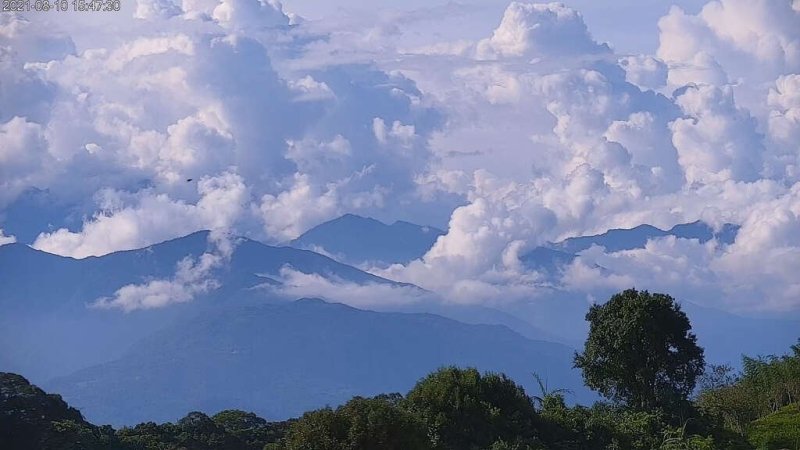
Sunrise over Akagaya Mountain (Photo/Huadong Valley National Scenic Area Management Office)
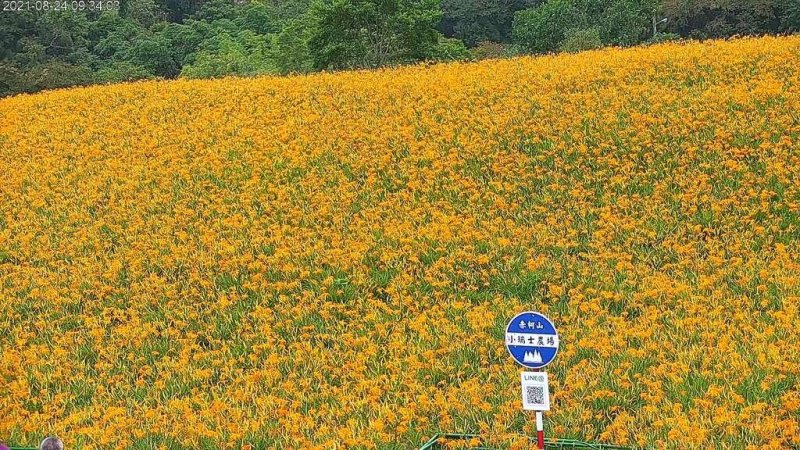
Redbud Sea on Chikako Mountain (Photo/Huadong Valley National Scenic Area Management Office)
| Tamaguri Inawashiro Railway Line |
Yuli Town is located in the southern part of Hualien County, in the middle section of the Hualien Valley. It’s a small, peaceful town where different ethnic groups live together in harmony. There are various theories regarding the origin of its old name, “Pushi Ge”. One theory is that it comes from the Bunun indigenous language, referring to a place covered with sand and dust. Another theory is that “Pushi Ge” is a transliteration of the Ami indigenous word “paheko”, meaning “fern”. Yet another theory is that in 1875, during the reign of Emperor Guangxu, the military commander who was stationed in Taiwan saw pure white jade all over the Xiugulian River. He compared the jade to “Pushi” and named the place “Pushi Ge”.
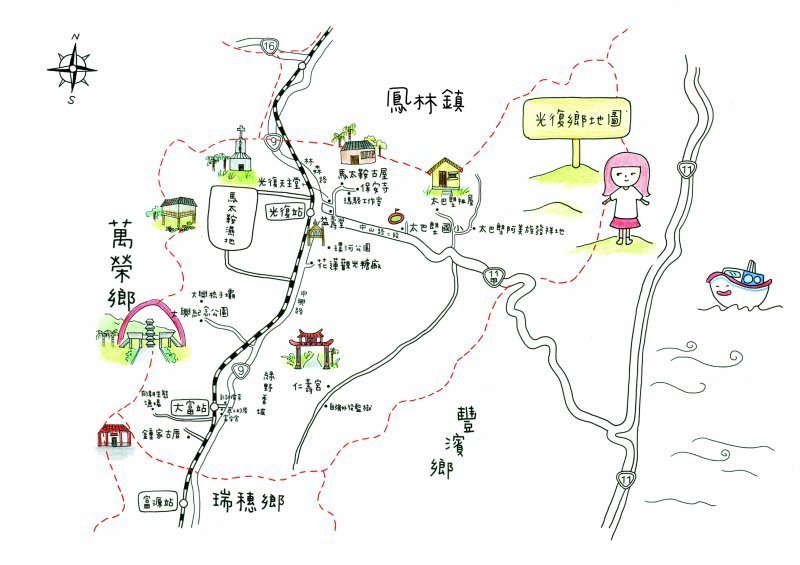
(Photo/Hualien Tourism Information Website)
Monument marking the boundary between the Eurasian and Philippine Sea tectonic plates
The Eurasian and Philippine Sea Plate Boundary Monument is located on the “Yufu Bicycle Path” in Yuli Town, Hualien County. It’s the only such landmark in Asia and one of the few in the world that marks the boundary between two major tectonic plates: Eurasia and the Philippine Sea. Originally, this site was the Xiugulian Creek Railway Bridge. Due to the pressure exerted by the tectonic plates, the bridge’s structure deteriorated over time. It was later converted into a bicycle path, allowing visitors to physically cross the boundary between the two plates.
Introduction and Features
- Geographical location: Hualien, Yuli, Yufu Bicycle Path (formerly the old railway bridge).
- Geographical uniqueness: The site of this monument lies at the boundary between the Eurasian Plate and the Philippine Sea Plate. It’s one of only two places in the world where such a plate boundary can be clearly seen on land (the other being in Iceland).
- Scenery and Landmarks: The bridge is marked with signs indicating the boundaries between the different sections. Visitors can step on both sections at the same time, while also enjoying the magnificent views of the Xiugulian Creek.
- Geological processes: The plate boundaries remain active every year. They rise by about a certain amount each year, turning this area into a living geological laboratory.
- Nearby attractions: The Yufu Bicycle Trail is approximately [length not specified] kilometers long. It’s often visited together with the Antong Tielama Station as part of a tour.
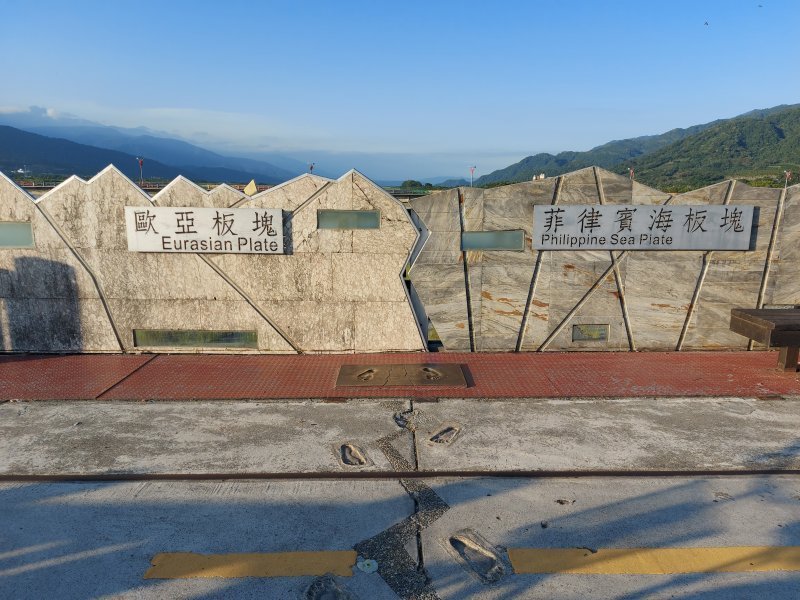
Monument marking the boundary between the Eurasian and Philippine Sea tectonic plates (Photo by Shentong)
▋Car rental stations nearby
TR9-Yutari Car Rental Station
Address: No. 164, Guangfu Road, Yuli Town, Hualien County 98143
Phone: 03 888 9683
▋Bike-friendly accommodations
Shiyu Homestay (No. 98, Chengxi 1st Street, Yuli Town, Hualien County 981)
▋Nearby attractions
Remains of Tamari Shrine
The “Yuli Shrine Ruins”, located on the west side of the train station, were built during the Japanese colonial period as part of the government’s policy to establish shrines throughout the region. After World War II, the main structures of the shrine were destroyed. Today, only two torii gates, some stone lanterns, and the steps leading to the shrine remain. It’s the best-preserved shrine ruin in Hualien. Once a dilapidated ruin overgrown with weeds, it was declared a historic site by Hualien County in 2008. Since then, its historical and cultural significance has been restored.
From the torii at the entrance to the top of the shrine, the path is quite gentle and easy to walk along. Looking down from above at the long staircase, one can appreciate the Japanese-style beauty of the scenery. It creates a sense of time and space that’s truly unique. This also adds to the tranquility and mystery of the shrine, which is nestled amidst the mountains and forests. *For more details about the path to Tamari Shrine*
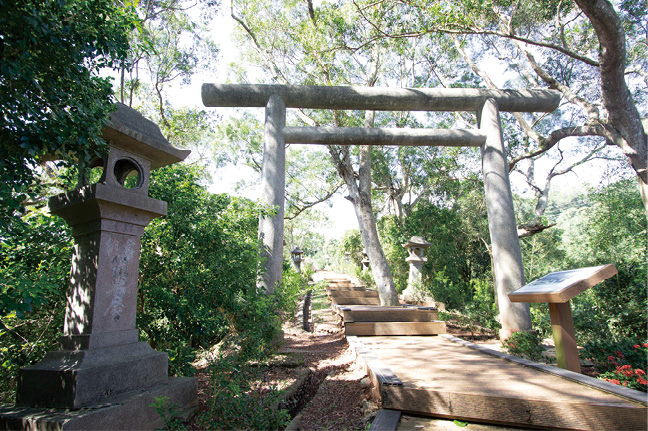
Tamari Shrine (Photo: Hualien Tourism Information Website)
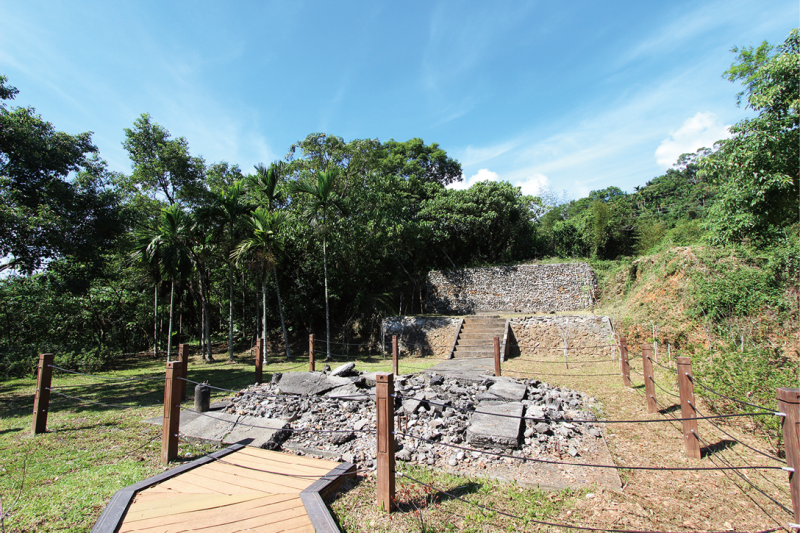
Tamari Shrine (Photo: Hualien Tourism Information Website)
Antong Hot Spring Area
When traveling through the Hualien Valley, in addition to enjoying the fields of rapeseed flowers that stretch as far as the eye can see, soaking in hot springs to relieve fatigue is a true pleasure. The Antong Hot Springs, with a history of over a hundred years, were once listed as one of the “Eight Scenic Spots of Hualien” under the name “Antong Zhuonuan”. With a temperature of 66 degrees, the nearly transparent hot spring water offers a pleasant warmth whether you’re soaking in the hot springs inside a bathhouse or an inn, or simply enjoying the water in an outdoor pool by the stream.
In 1904, a Japanese man who collected camphor discovered hot springs by the Antō River. By 1930, the Japanese built a police guesthouse there and established public baths. Over time, this place became a popular hot spring resort. The Yutari Onsen Public Baths were later renamed Antō Onsen Grand Hotel. However, the hot spring facility still retains the wooden buildings constructed during the Japanese colonial period. The exterior of the buildings and the Japanese-style rooms with tatami floors are well-preserved. A sign reading “Yutari Onsen Public Baths” hangs above the entrance, adding to the building’s serene and quaint atmosphere.
In addition to enjoying the hot springs in Lian Tong, there’s also the ancient An Tong Yue Ling Trail, which was built during the Qing Dynasty. The trail is approximately 13 kilometers long. Along the way, visitors can enjoy beautiful, pristine scenery with significant historical value. This makes it another great option to experience while visiting Lian Tong’s hot springs.
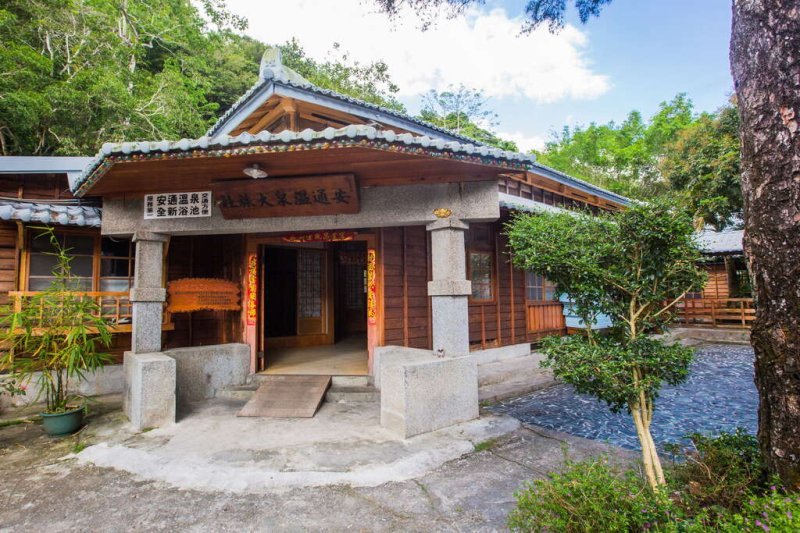
An Tong Hot Spring Bathing (Photo/Huadong Valley National Scenic Area Management Office)
Rokkushi-yama
Rokushishi Mountain, Akako Mountain, and Tamarimori Mountain are the three main areas where golden needle flowers are cultivated in the Hualien Valley. These places are perfect for enjoying the sea of golden needle flowers from August to September each year. Rokushishi Mountain is located on the coastal mountain range, about 800 meters above sea level, on the east side of Chukuda Village in Furui Township. After walking along a winding mountain path, one is greeted by vast fields of golden needle flowers. Several farmhouses and pavilions are scattered among the fields, creating a picturesque rural scene.
And the 60-stone mountain during the period when the golden needles bloom has its own unique charm. The lush green hills stretching for miles create a sense of openness and freedom. Standing in the viewing pavilion and looking down at the Huadong Valley, or gazing at the starry sky at night, it’s a sight that’s hard to forget.
Real-time images of Hualien’s Liushi Stone Mountain
To provide visitors with up-to-date information about the flowering conditions in the area, the Hualien Valley National Scenic Area Management Office has installed a high-resolution camera at “Liu Shi Shan – 4K Live Video”. This camera captures stunning views of the flower fields, clouds, starry sky, and sunset in 4K resolution and with a 270-degree panoramic view. Visitors don’t need to leave their homes; they can simply access the footage online to enjoy these breathtaking views. In addition to viewing the scenery at any time, visitors can also check the current flowering conditions and weather through the live broadcast, which serves as a useful reference for planning their visits.
🎥 Live footage of Hualien’s Liushi Stone Mountain
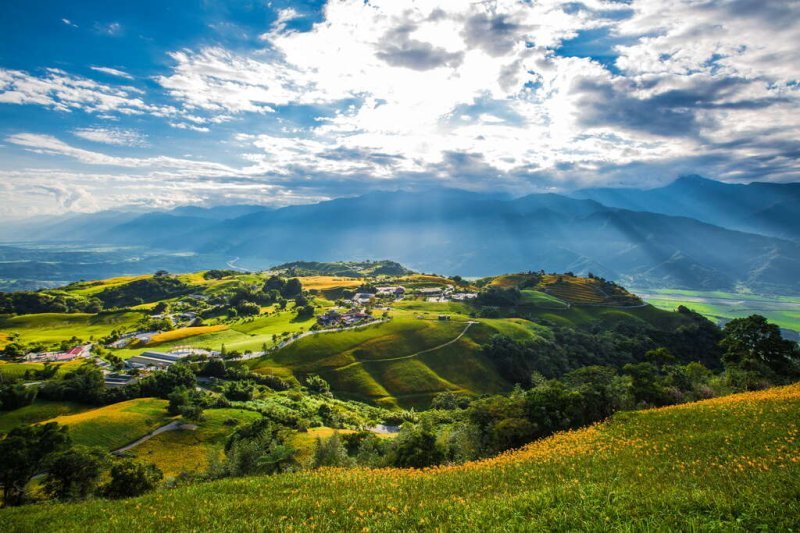
Rokushi-yama Mountain (Photo/Management Office of Hua Dong Valley National Scenic Area)